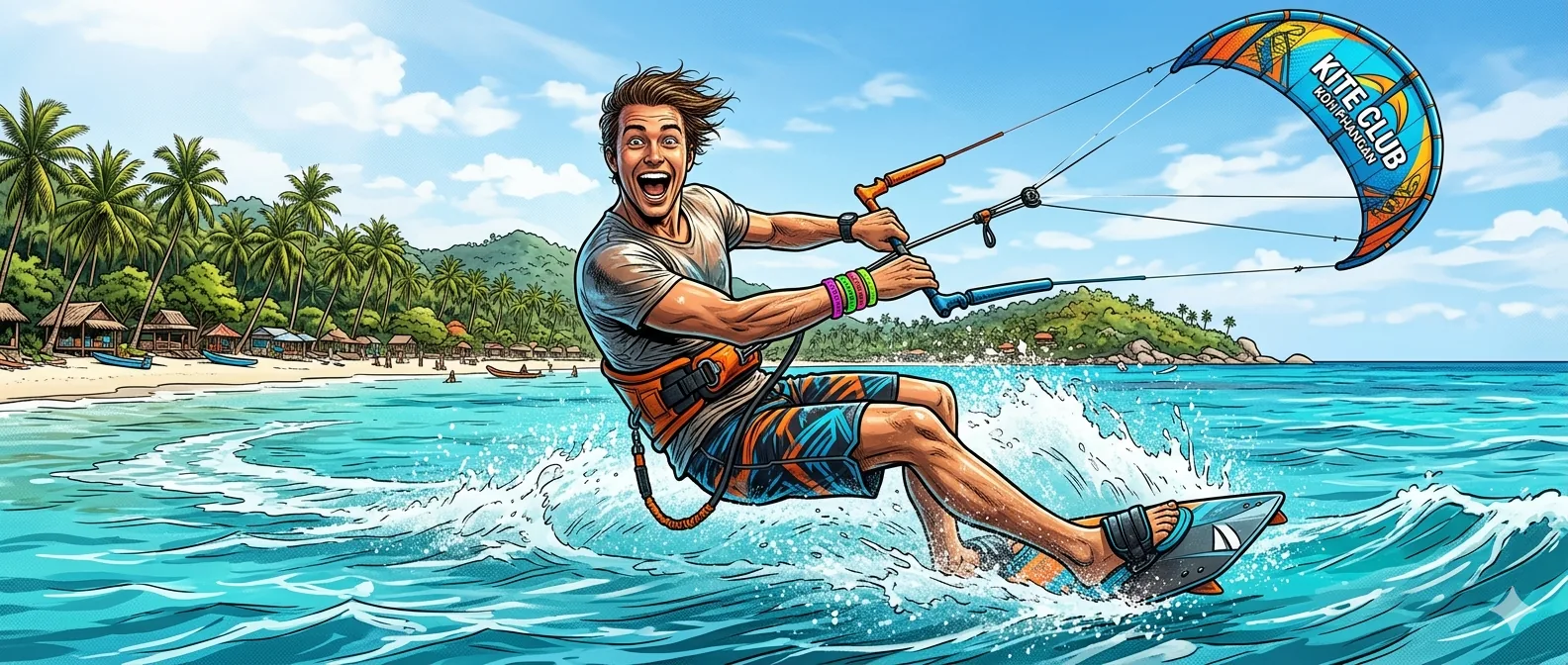
No. Plenty of people take their first kite lesson in their forties, fifties and beyond. Kitesurfing is less about strength than about technique — the harness takes the pull, not your arms. What matters is how you learn, not the year you were born.
📖 3 min read · Updated September 2026 · By Sergei Sharvarok · Founder & Head Instructor
Why Age Matters Less Than You Think
- The harness does the work — the kite is attached to your waist harness, so your legs and core carry the load, not your arms.
- Technique beats power — good kite position and board edge matter far more than fitness.
- Experience helps — adults tend to listen, follow the steps and respect safety rules, which speeds up learning.
What Actually Matters
- Being comfortable in the sea and able to swim.
- Reasonable general fitness — you do not need to be an athlete.
- Telling your instructor about any back, knee or shoulder injuries before the first lesson.
- Patience: the first sessions are about control, not speed.
How Lessons Adapt
Private lessons (one student per instructor, 2-hour sessions) let the pace follow you. Kite size is chosen to keep the pull manageable, breaks are part of the plan, and with radio-helmet coaching you get corrections while you ride rather than shouted from the beach. Our senior instructors — Sergei, co-founder Abdulla and Abdo — hold IKO Level 3.
Warm up before each session — hips, shoulders and lower back — and stop while you still feel good. Tired muscles cause most of the awkward falls.
Simple Preparation at Home
- Core work: planks and side planks help you hold the edge.
- Leg strength: squats and lunges for board control.
- Balance: anything from yoga to a balance board.
- Swimming: confidence in the water makes every stage calmer.
Why Koh Samui Is a Good Place to Start
The water is 27–30 °C all year, so no wetsuit and no cold. From December to April we teach at Nahai Beach — shallow, flat water with no waves, where you can stand up between attempts. And when the wind takes a day off, e-foil, SUP and kayak keep the holiday moving. Start with the first kitesurfing lesson (5,000 THB, 2 hours private).
Frequently Asked Questions
Is 50 too old to learn kitesurfing?
No. Many people start in their fifties and later. Technique and a patient learning pace matter far more than age.
Do I need to be very fit to kitesurf?
No. General fitness and being comfortable in the water are enough; the harness takes most of the load.
Are private lessons better for older beginners?
Often yes — the pace follows you, sessions are shorter and you get the instructor's full attention.
What if I have an old injury?
Tell us before your first lesson so the instructor can adapt the session. If in doubt, check with your doctor first.